Special Report

Ecuador at the Crossroads of Transnational Crime: Violence, Criminal Reconfiguration, and Regional Challenges – PART II

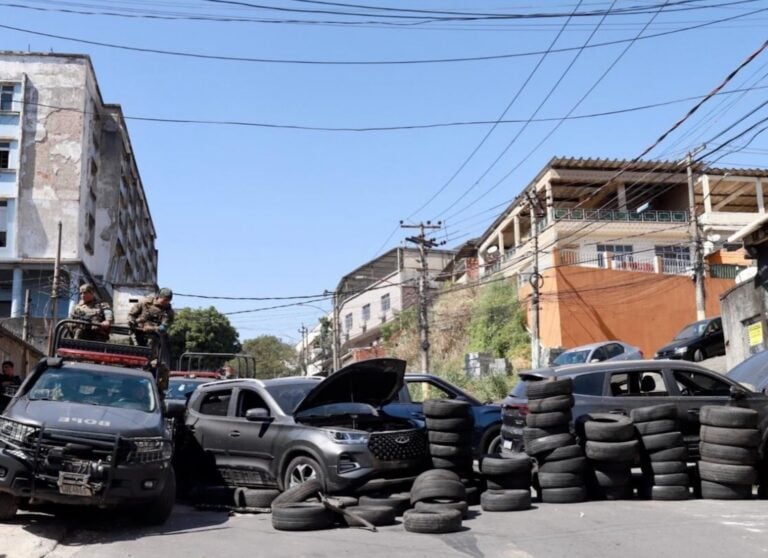
For decades, Ecuador was perceived as an exception in a region plagued by drug trafficking, armed violence, and criminal capture of the state. While neighboring countries faced open wars between cartels and state forces, Ecuador seemed to remain on the sidelines of these dynamics. That image began to slowly crack and finally collapsed in January 2024, when President Daniel Noboa declared an internal armed conflict and designated 22 criminal organizations as terrorist groups.

The measure exposed a reality that had been brewing for years, with a dramatic increase in homicides, armed gangs vying for territorial control, prisons turned into criminal syndicates’ operational hubs, and overwhelmed institutions. Ecuador was no longer a peripheral player in regional drug trafficking, but a strategic hub in transnational criminal networks.

Read This Article
Academia

Sanctions, Seizures, Surveillance Combat Synthetic Drug Trade in Indo-Pacific

This article was originally published on FORUM, the U.S. Indo-Pacific Command magazine, on March 12, 2026. The synthetic drug trade, spearheaded by fentanyl and methamphetamine, has metastasized from a criminal enterprise into a complex geopolitical phenomenon, demanding an expansive, multidimensional international response. This global crisis hinges on the ready supply of precursor chemicals — primarily from China — driving two distinct but connected epidemics across the Indo-Pacific. It is defined by trafficking, mislabeling, the use of front companies, and exploitation of legal ambiguities and variance between nations and fragile state institutions. Synthetic opioids, primarily fentanyl, account for tens of thousands [ … ]

‘A Simple Approach’: Analysts Say Regional Cooperation Is Crucial in Illegal Fishing Battle

This article was originally published on the U.S. Africa Command’s Magazine ADF, on November 6, 2025. Africa loses an estimated $11.2 billion in annual revenue to illegal, unreported and unregulated (IUU) fishing. The challenge is particularly acute in West Africa, which loses up to $9.4 billion to the scourge. Illegal fishing by foreign industrial and semi-industrial trawlers, particularly from China, has driven food insecurity and threatened the jobs of more than 10 million men and women who work in Africa’s artisanal fisheries. Security professionals recognize the threat. Col. Roland T. Bai Murphy, commander of the 23rd Infantry Brigade of the [ … ]

Iranian Military Branch Casts Shadow Across Africa

  This article was originally published on U.S. Africa Command magazine ADF, on March 11, 2026. As foreign powers sign business deals and deepen diplomatic ties in Africa, one foreign player operates mostly behind the scenes: Iran’s Islamic Revolutionary Guard Corps (IRGC). “The IRGC, the regime’s military-intelligence empire, has spent 40 years constructing a shadow network across Africa, embedding itself in local conflicts, recruiting ideological loyalists, arming insurgent movements, and turning entire regions into extensions of Tehran’s strategic project,” according to a blog post by Iranian-born journalist Shabnam Assadollahi. The group’s many efforts include ideological indoctrination in northern Nigeria, arms [ … ]

Space, Cyber Significant Factors in Operation Epic Fury

  This article was originally published on U.S. Space Command magazine Apogee, on March 4, 2026. In the predawn darkness before Operation Epic Fury burst into public view, the first blows against Iran were struck by forces orbiting hundreds of miles above Earth. What unfolded, before the obliteration of hundreds of targets, Pentagon officials say, was the onset of major combat operations in space and cyberspace. “As always, operational security was paramount as we sought to maintain and sustain the element of surprise,” U.S. Air Force General Dan Caine, chairman of the Joint Chiefs of Staff, said at a Pentagon [ … ]

Magazines

Edition 2023
Edition 2023
Edition 2021-2
Edition 2021-2
Edition 2021-1
Edition 2021-1
General Javier Eduardo Iturriaga del Campo, commander of the Chilean Army
“One of our mission areas is to contribute to international cooperation and our country’s foreign policy, and within that framework the Army maintains a broad agenda of knowledge and cooperation at the regional and international level with partner nations. The Chilean Armed Forces are currently participating in several peacekeeping missions, specifically in Bosnia and Herzegovina, Cyprus, Colombia, and the Middle East, and in this area, they also participate in exercises such as U.S. Southern Command’s Southern Vanguard.”
General Javier Eduardo Iturriaga del Campo, commander of the Chilean Army
Colonel (ret.) Gladys Pecci, Paraguayan Vice Minister of National Defense
“Only 5.6 percent of the total [Paraguayan] Armed Forces’ personnel are women, and we want to increase this number. The Ministry of Defense and the Armed Forces are being very receptive to breaking established structural paradigms, which allow women to fill certain roles, because we believe that democracy is enhanced when there is inclusion of women in the defense field.”
Colonel (ret.) Gladys Pecci, Paraguayan Vice Minister of National Defense
Major General William L. Thigpen, U.S. Army South commanding general
The collaboration and partnership that comes with an exercise like this [Southern Vanguard 22] is extremely important to us. It builds interoperability. It also allows us to understand each other’s capabilities. But most importantly, it builds camaraderie down to the tactical level, as well as readiness for both countries, and partnership.”
Major General William L. Thigpen, U.S. Army South commanding general